
WHERE IT CAME FROM
The idea was simple: a maze bigger than the screen, revealed only where you trace, with the view panning along as you go. No brief, no client, no stakeholder—just a reason to make something for people with a phone, and a way to see how far I can push AI visually.


Playable Version
the evolution of the game
The first maze worked, just wasn’t a game yet.
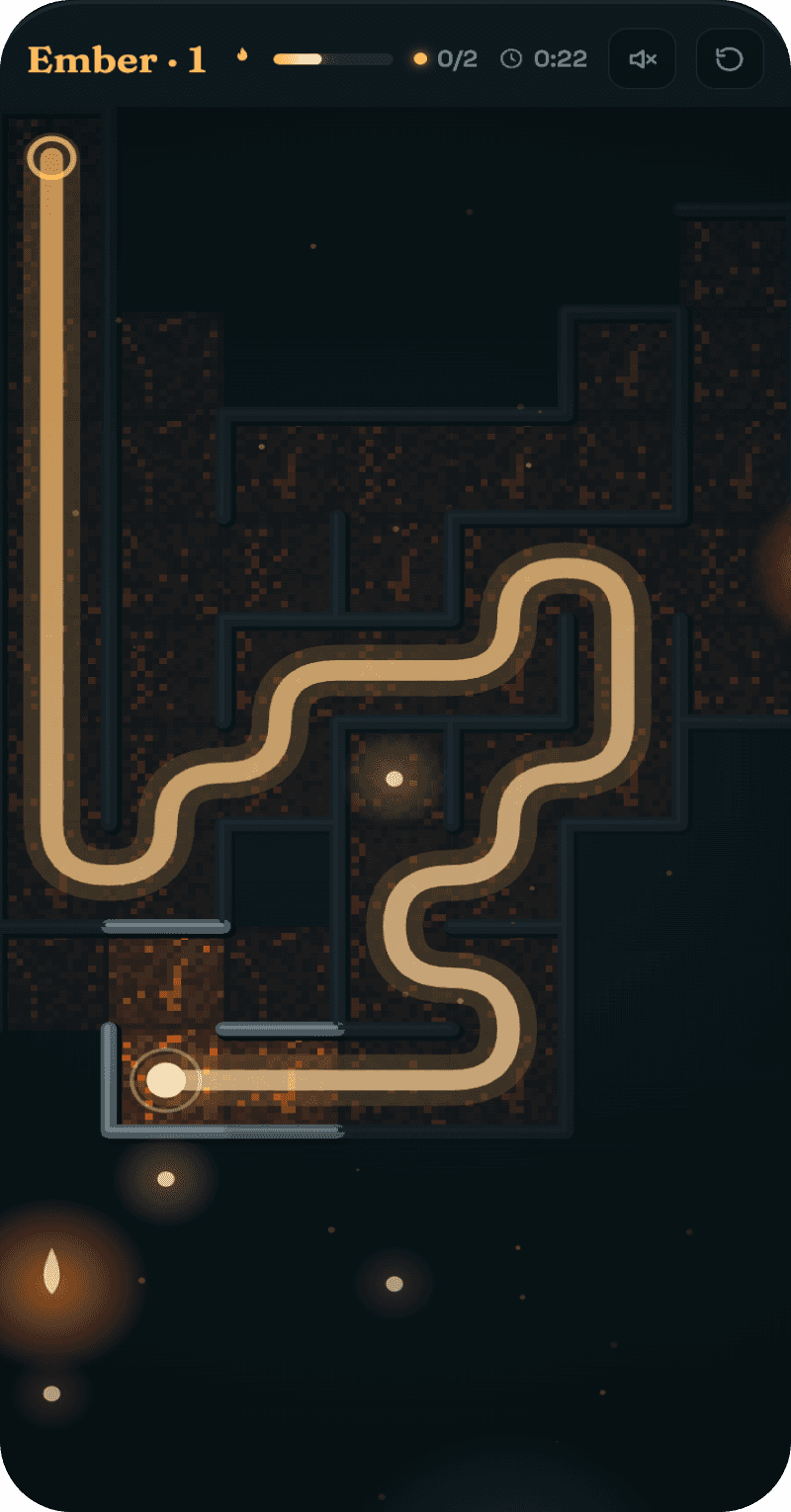
After the first pass, I realized the game was too easy: a standard generated maze has one route, so tracing it and solving it are the same act. I asked AI for ways to add challenge without losing the calm. The ideas I chose worked in layers: braid the maze to create loops and real route choices; add fog-of-war so unexplored space stayed uncertain; and introduce light pickups that opened and closed the fog's aperture, making every detour part of the decision.


A GAME THAT COULD CHANGE WORLDS
A different visual style without it being just a palette swap.
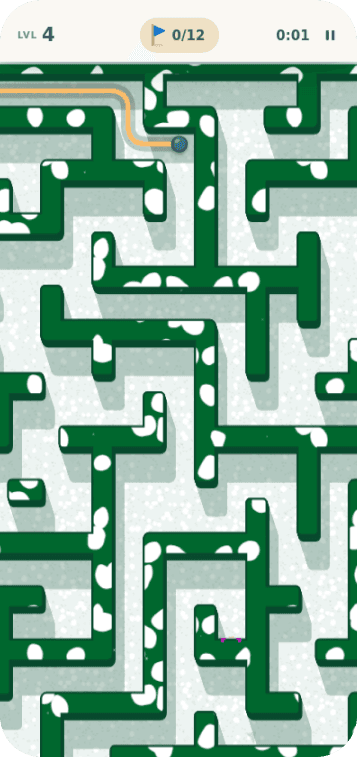
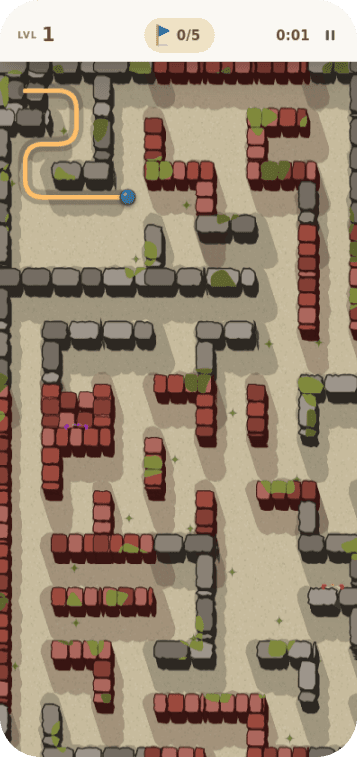
The hand-drawn and isometric explorations were good—but they competed with what made the game legible: fog, light, and branching routes. The breakthrough was treating every world as its own renderer behind a shared system, so a garden, mine, paper world, and island could all play by the same rules without looking like recolors.


REMOVING FOG-OF-WAR
The mechanic that started the project eventually stopped earning its keep.
Fog-of-war had been part of the game since hour two, but every new world needed its own bespoke reveal and light treatment. More importantly, it had stopped creating the meaningful difficulty: braided mazes and the collection requirement were doing that work already. Fog was adding mood, not value. Cutting it—and the light meter—made room for the premise that had been missing all along.
DECISION POINT
A connector is missing. There needs to be something that ties these disparate worlds together
FROM COLLECTING TO HIDING
Olly Olly Oxen Free
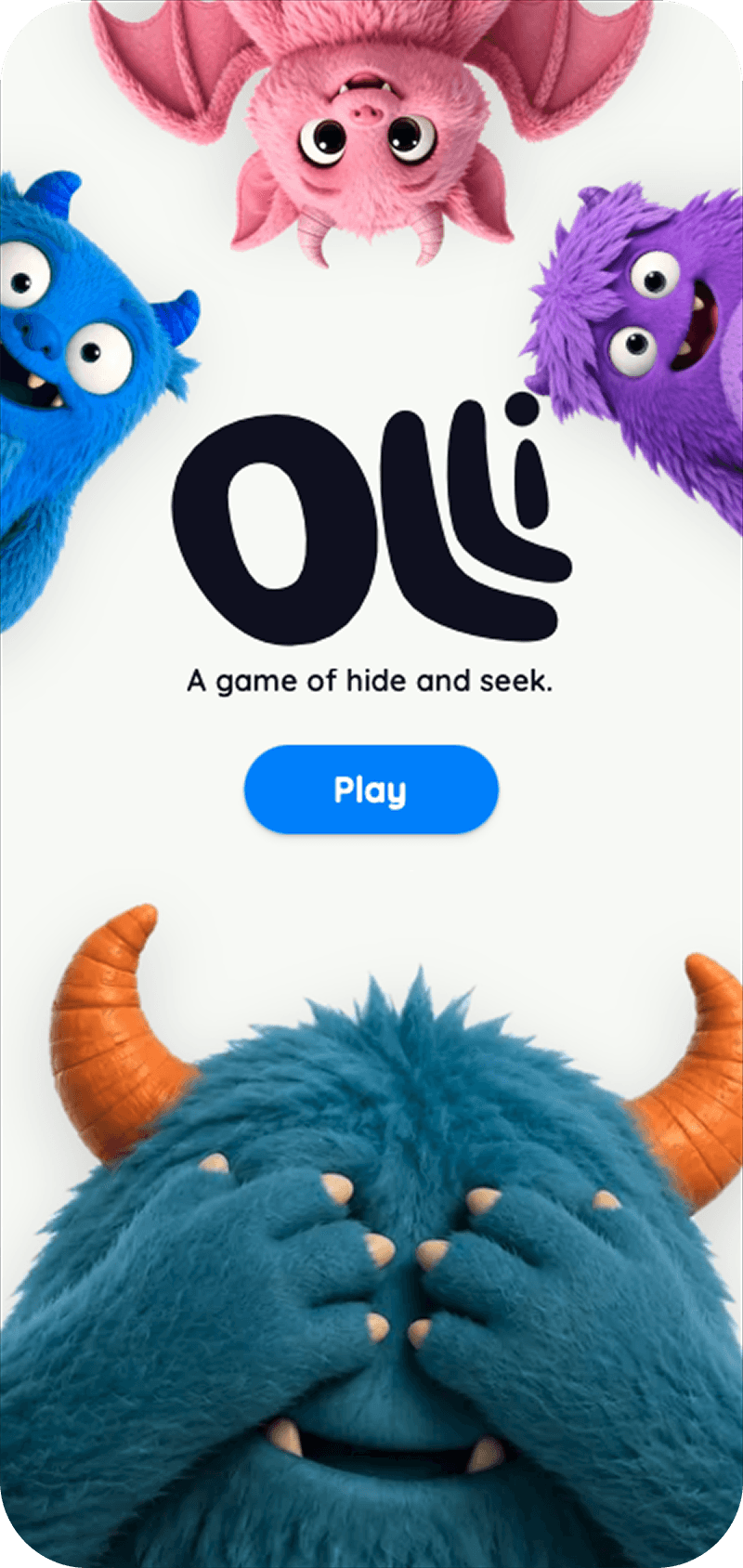
Olly Olly Oxen Free is the hide-and-seek call, but the game had only been about collecting. Reframing the collectibles as hidden friends changed everything: characters needed real places to hide, and someone to be hiding from. Meet Olli and his friends.





WORKING WITH AI, HONESTLY
AI made the experiments possible. Judgment made them worth keeping.
Every line of code was written by AI. But the decisive work was noticing when the game felt wrong: too easy, too laggy, too ornate, too forgiving. The AI removed the execution barrier between a judgment and a test. My role was to hold the quality bar, name the problem, and keep only what made the game clearer, calmer, and more alive.
Built across AI tools and published as a standalone web game.
What's next
Concept complete, with more to come.
Olli now ships three worlds: hedge, cave, and a forgotten village, with a hiding mechanic that finally matches the name. More worlds are still to come, and an App Store release is next.
Built entirely with Claude.